Sustainability is one of the most important aspects to building managers, whether you’re about to break ground on a new facility, or you’re looking for ways to make your current facility more efficient. Green architecture has become increasingly popular since it helps reduce carbon emissions, as well as show a massive drop in energy consumption. The goal is to leave as little of a carbon footprint as possible, so finding ways to make your facility more sustainable is crucial.
The Importance of Sustainability & Green Architecture
Most buildings, skyscrapers, and high-risers you see that are made of glass and steel may appear alluring and awe-inspiring, but those buildings certainly use up a lot of energy, which maximizes their carbon emissions. Tall glass and steel structures require significant energy to keep the interior of the building at the optimal temperature, depending on the weather and season. According to The Economist, “In America, buildings account for 65% of electricity consumption, 36% of total energy use, and 30% of greenhouse-gas emissions.”
The ultimate goal with green architecture is to drastically reduce these numbers to a more manageable and sustainable level. By getting started now, we can work towards a greener future with less emissions and energy use collectively. Using these different materials is the first step towards a green and sustainable future.
Utilizing the Best Green Building Materials
The first step towards making a green facility is by utilizing sustainable materials. You’ll want to sort through materials that can help your building maintain its optimal temperature without having to kick the HVAC system into high gear. Certain woods and rock types make for ideal construction material due to their thermal mass. Utilizing recycled material can also have its benefits because it’s reducing waste while getting more use out of a previously discarded material.
How to Make Your Current Facility Greener
If your facility was already constructed before the idea of green architecture really caught on, don’t fret. There are  still steps that can be taken to increase the sustainability of your facility. A major area that you can focus on is your facility’s restrooms. More importantly, replacing your standard partitions with a more sustainable material, like HDPE plastic.
These green building materials can help retain the heat in your restroom while combating the elements, such as humidity and moisture. They’re durable, scratch-resistant, and non-absorbent, so you won’t spend a lot of time and money on maintenance. They’re made from recycled material and they’re backed by a 25-year warranty, so you won’t have to shell out a small fortune to replace them.
Getting Started on Making Your Facility Sustainable
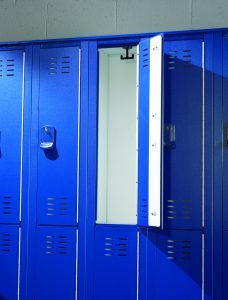
By using HDPE plastic in your facility, you can start small and work towards a greener future for your building. This plastic will outlast your current toilet partitions in your restroom, and they’ll incur less damage and won’t have any mold growth due to their strong and reliable structure. If your facility has lockers or storage compartments, you can replace the metal with HDPE plastic lockers, which will provide secure storage and durability while increasing your buildings sustainability.
Want to learn about how HDPE plastic and other materials can help make your facility more sustainable? Download this eBook, Sustainable Building Products: How to Make Your Facility Eco-Friendly from Top to Bottom, from your friends at Scranton Products.
 the long term. Most new hospitals have taken to this approach and begun implementing sustainable design aspects and green materials that can help reduce emissions and energy use. If you’re the manager of a facility or hospital, you’re probably trying to think of ways to cut costs on your energy bill through long-lasting solutions.
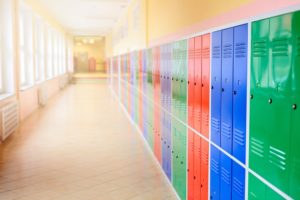 Students aren’t always gentle with the lockers in your school. In fact, they can sometimes be a bit rough. Most students choose slamming the locker shut as their preferred method of closing it, and over time, this can result in the locker door and frame becoming dented. Worst of all, this can cause the lockers to become less secure.
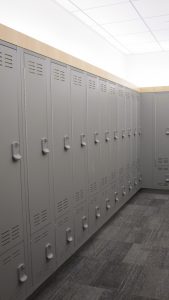 When you notice the unsightly dents, you’ll want to fix them before they get worse. Take a rubber mallet, or a flat hammer, and with medium force, strike the dent. You should have a hard flat surface behind the opposite direction of the dent to ensure that the dent evens out. Using light to medium force, strike the dent a few times. It’ll start to flatten out and become more even with the locker’s surface. You’ll want to complete this action after school hours due to the loud noise that’s expected when hammering the locker—you won’t want student distraction to be an issue.
 Now that you’ve got your time to paint, you need your place. Find an open area in the school that you can paint. It will allow you to have the room to paint multiple lockers, so you can start getting the job done. That way, you can reinstall the lockers quickly. You can paint the lockers where they stand, but you’ll need plenty of tarp or drop cloth coverage to prevent any paint from getting on the floor or the wall.
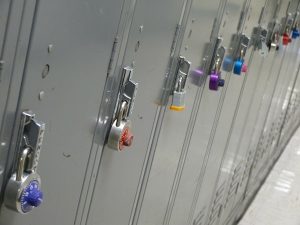 Metal lockers are very durable and reliable storage compartments for the students. Sometimes, though, their maintenance, care, and upkeep outweigh their usefulness compared to plastic lockers. The constant maintenance and repainting certainly adds to the locker’s costs. What you need is a reliable locker that doesn’t require the constant upkeep while retaining its appearance and durability.
 You may not really take the time to consider the variety of materials that can be used as toilet partitions. However, reviewing all of your options can allow you to make the best choice for your facility. Most toilet partitions are made from plastic with an inner core made from kraft paper or cardboard. Materials like Phenolic, Baked Enamel, and Plastic Laminate may look nice in your restroom, but they may be left vulnerable to the moisture and humidity in your restroom. The inner core will absorb the moisture, and over time, it’ll sprout mold, leading to a pungent odor and a substantial problem to solve.
 A Material That Lasts